
November 12 — Ragusa Hub hosted a discussion titled “Who Shapes the Way We Think?”, exploring the relationship between culture, media and politics, as well as the ways in which our perceptions of society and the world around us are shaped.
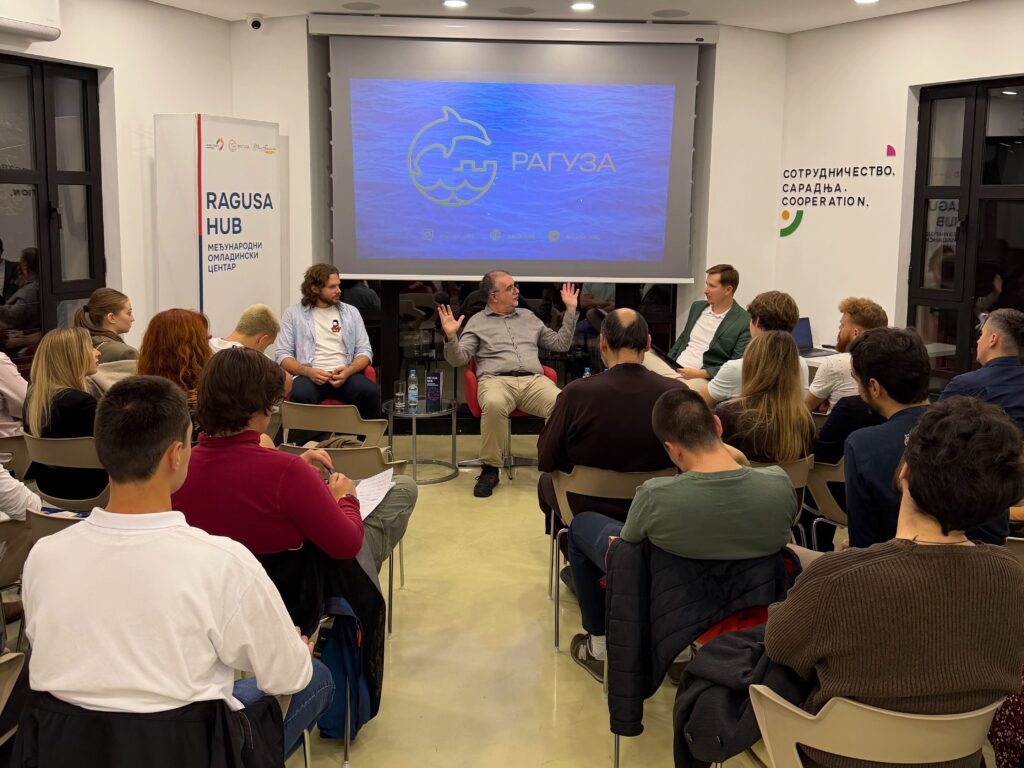
Speaking about the role of culture in contemporary society, Vladimir Kolarić, dramaturge and art theorist, noted that culture is increasingly understood as closely intertwined with identity — the way individuals and communities perceive themselves and define their place within a broader social context. Changes in culture, therefore, extend beyond values and traditions, also influencing political processes.
He particularly emphasized that culture is increasingly used as an instrument of political influence. Unlike more direct forms of power, cultural influence operates through values, beliefs and narrative frameworks that gradually become embedded in everyday thinking. This is precisely why culture has become one of the key arenas of contemporary social and political struggles.
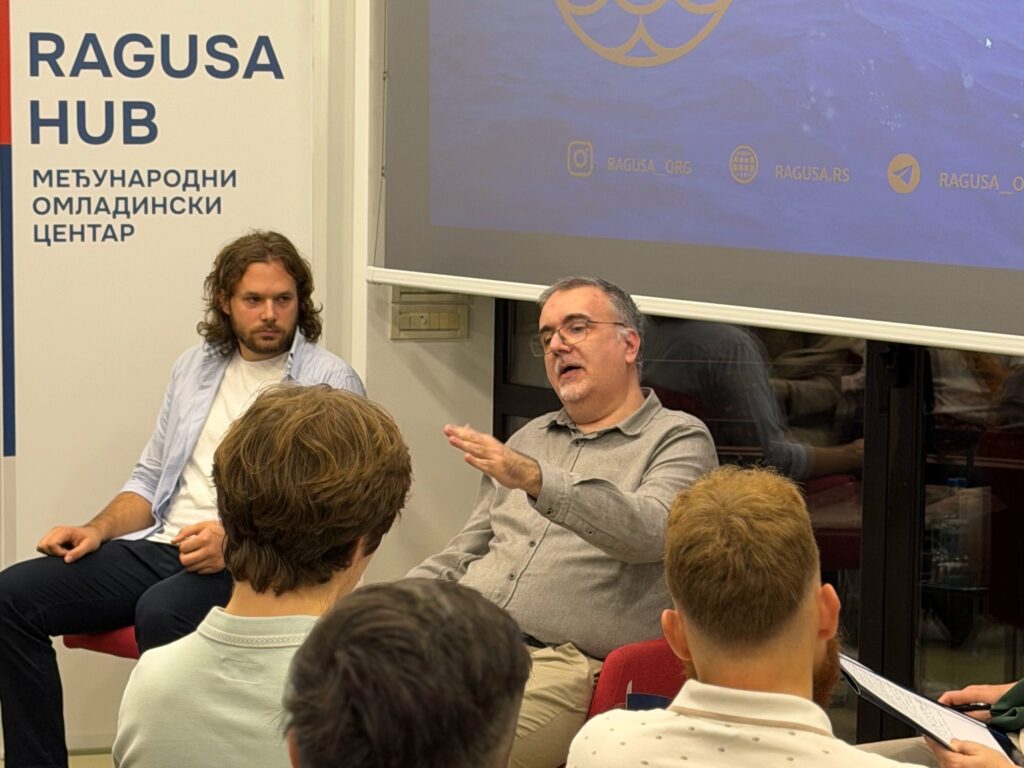
In this context, the discussion also addressed the question of how societies can preserve their cultural identity in a world where different cultural and political influences constantly intersect. Kolarić pointed out that cultural influence is not exercised solely through organized propaganda: ideas and attitudes can also spread unconsciously, through everyday communication and the adoption of certain patterns of thought and behaviour. This makes it essential to critically examine the messages we receive, while also understanding who shapes them and for what purpose.
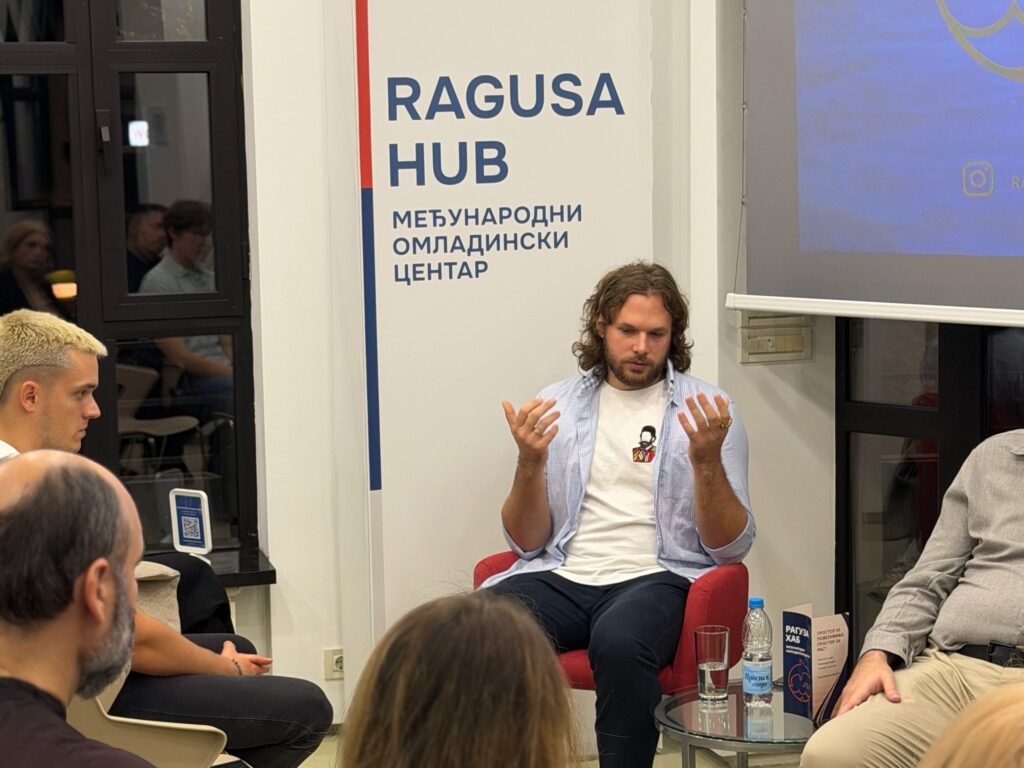
Building on this discussion, Nikola Jović, political scientist and journalist, explored the role of the media and social networks in shaping public opinion, particularly from the perspective of younger generations. He highlighted the distinction between culture as content and the media as the channels through which that content is communicated. He also discussed the dual role of culture in society: it can serve as a force for integration and social cohesion, but it can also be used to deepen divisions and fuel instability.
Particular attention was given to the transformation of the media landscape and the opportunities created by social networks. Unlike a time when traditional mass media held almost exclusive influence over public discourse, today’s communication platforms offer new ways of sharing alternative perspectives and challenging the dominance of major media institutions. At the same time, this expanded media space raises new questions: who are the content creators, whose interests do they represent, and how do their messages shape audiences?
The discussion also addressed broader questions of media responsibility, the role of content creators, society’s resilience to propaganda, and the possibilities of rebuilding social trust and cohesion.
At a time when the boundaries between information, interpretation and influence are becoming increasingly difficult to distinguish, the ability to critically assess media messages and understand the mechanisms behind the formation of public opinion is an essential part of active participation in society.