
Ragusa Hub hosted a lecture “Politics and Law of the Eurasian Economic Union: Two Models of European and Eurasian Integration”, delivered by Prof. Dr. Mark Lvovich Entin, Professor and Head of the European Law Department at the Moscow State Institute of International Relations (MGIMO).
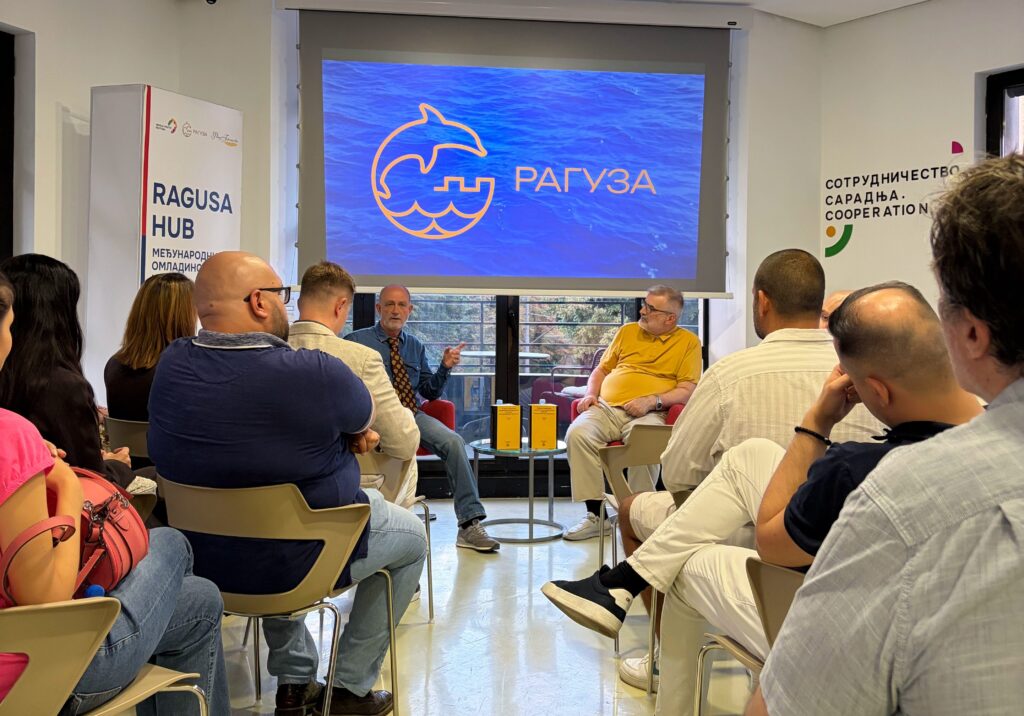
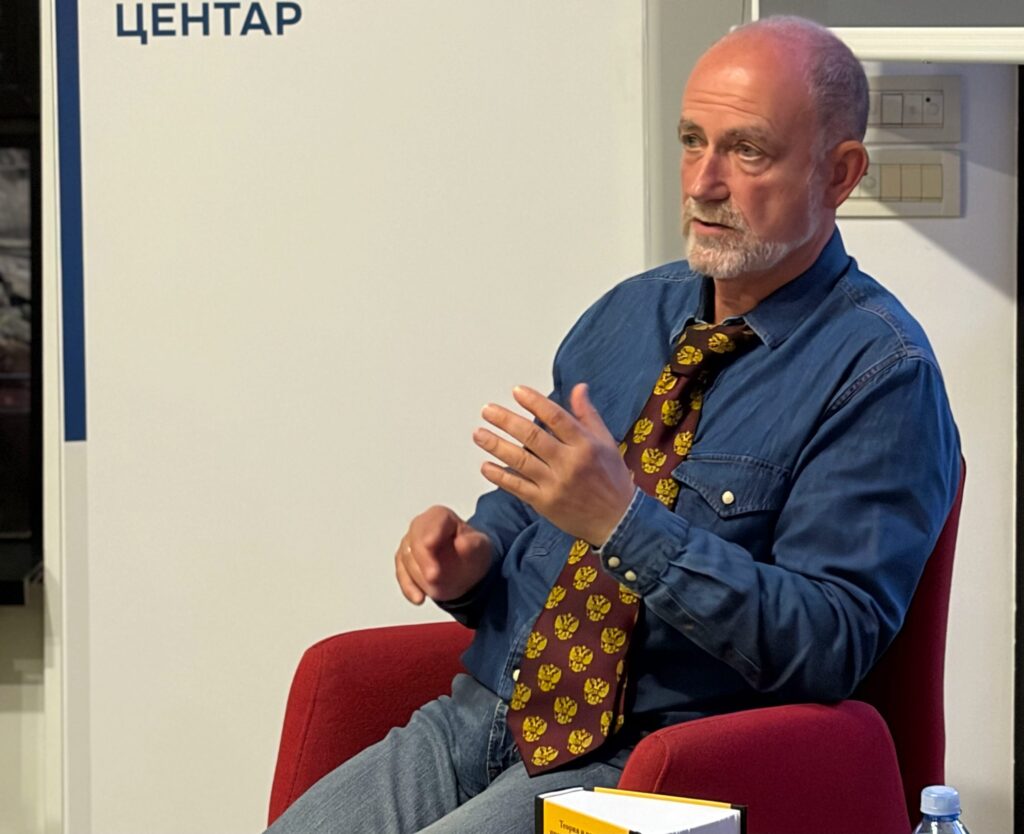
Prof. Entin holds a PhD in Law and is a professor of international and European law. He previously served as Director of the Institute for European Studies at MGIMO University and as Director of the Institute of European Law. From 2012 to 2016, he served as Ambassador of the Russian Federation to Luxembourg. Earlier in his career, he was Deputy Permanent Representative of the Russian Federation to the Council of Europe and First Deputy Director of the Directorate of European Cooperation at the Ministry of Foreign Affairs of the Russian Federation.
The lecture focused on international law, sovereignty and contemporary models of international integration, with particular attention to the Eurasian Economic Union and BRICS. The discussion was moderated by Prof. Dr. Branko Rakić, Professor at the Faculty of Law, University of Belgrade.
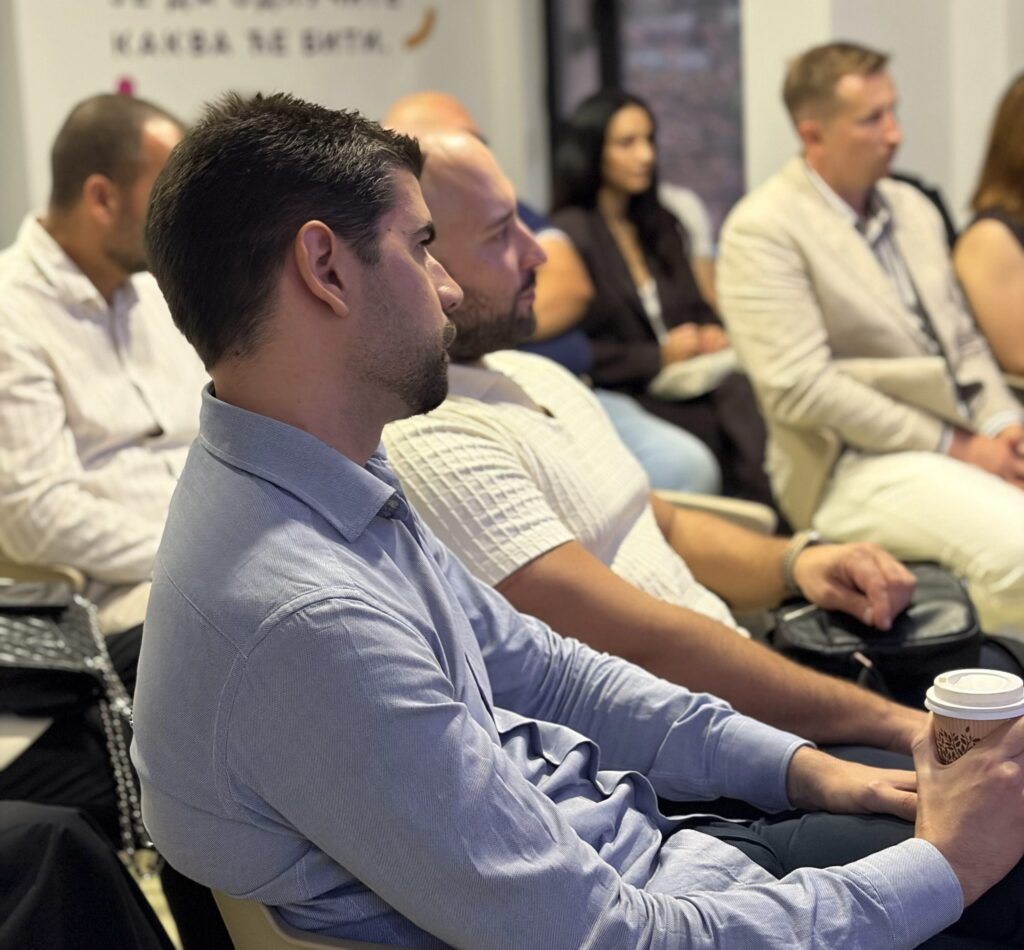
One of the central topics was the role of international law in relations between large and small states. As discussed during the lecture, for states that do not possess the economic or political power of major powers, international law represents one of the important mechanisms for protecting their position. In this context, the principle of sovereignty remains one of the fundamental principles of international relations.
Particular attention was given to the reasons why countries such as Serbia should consider different models of international cooperation. Speaking about the BRICS countries, Prof. Entin argued that their position within the international system creates a strong interest in preserving international law and the principle of sovereign equality of states. At the same time, he pointed to different approaches among Western states, which, in his interpretation, seek to adapt existing international norms to their national interests.
The Eurasian Union as a Different Model of Integration
The lecture then turned to the Eurasian Economic Union (EAEU) and its approach to integration. Prof. Entin explained that the EAEU is not intended simply to replicate the European Union model. Its cooperation is primarily focused on economic integration, while also encompassing issues of security, counterterrorism and internal stability.
The discussion highlighted the importance of creating different levels and formats of cooperation that allow countries to participate in specific areas without necessarily becoming full members of an integration framework.
From Bilateral to Multilateral Cooperation
Another important topic was the growing role of multilateral cooperation. While bilateral relations have traditionally been one of the main forms of international cooperation, states are increasingly participating in several regional and international structures simultaneously. South Africa was mentioned as an example, combining its participation in the African Union and BRICS with cooperation in other international formats.
Prof. Entin also noted that integration can encourage states to address common problems collectively, as economic and political interdependence creates shared interests. The discussion included the development of BRICS institutions, including the New Development Bank, and the emergence of new mechanisms for economic and financial cooperation.
Payment Systems as a Key Challenge
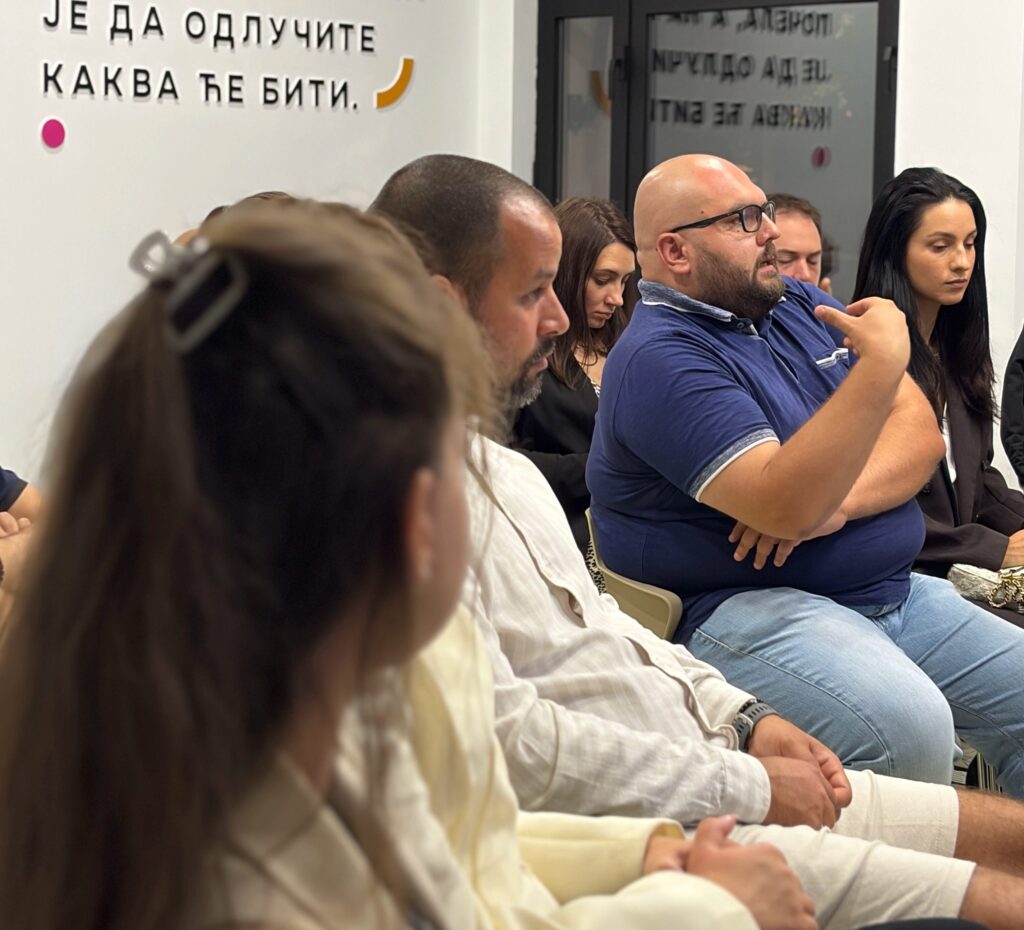
The development of alternative payment mechanisms was another topic discussed during the lecture. Prof. Entin addressed the growing use of national currencies and digital forms of payment in international trade, noting that such systems can create new opportunities while also presenting technical and financial challenges.
Changes in Russian trade flows following the introduction of sanctions were also discussed, particularly the growing importance of Asian and other non-European markets. At the same time, the development of new financial mechanisms within BRICS also raises questions about relations with countries outside the grouping and their response to these changes.
Flexibility as a Feature of BRICS
The final part of the discussion focused on the flexibility of the BRICS format. Unlike traditional integration models with clearly defined membership requirements, BRICS provides different ways for countries to participate — from attending meetings and engaging in thematic cooperation to joining specific projects and programmes.
India was highlighted as an example of this approach. Before becoming a BRICS member, it participated in numerous meetings and cooperation formats, gradually expanding its engagement across different areas.
The lecture at Ragusa Hub thus opened a broader discussion on the changing international system, the role of sovereignty and international law, and the emergence of new forms of economic and political cooperation.